


[KoMiCo Lab] Arc Coating to Improve the Lifespan and Quality of Semiconductor Equipment Components
The PVD (Physical Vapor Deposition) process in semiconductor manufacturing is a highly advanced technique that involves the precise deposition of ultra-thin films on the scale of tens of nanometers. Throughout this process, maintaining stable physical and chemical properties is essential.
During deposition, the target material can scatter inside the chamber, leading to uneven redeposition on various component surfaces or causing surface erosion and contamination. These issues may shorten the maintenance cycle of equipment and degrade process yield. As a result, protecting and stabilizing component surfaces has become a critical factor directly tied to the quality and productivity of semiconductor manufacturing.
To effectively address these demanding conditions, one of the most prominent technologies introduced is Arc Coating.
■ What Is Arc Coating?
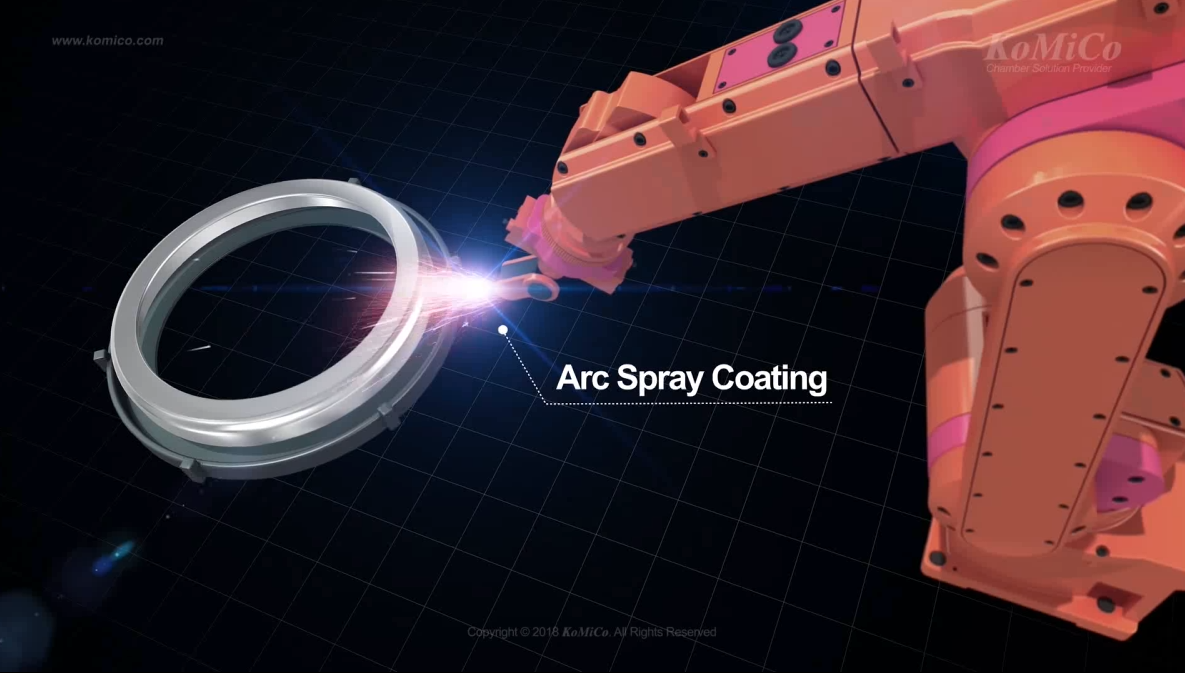
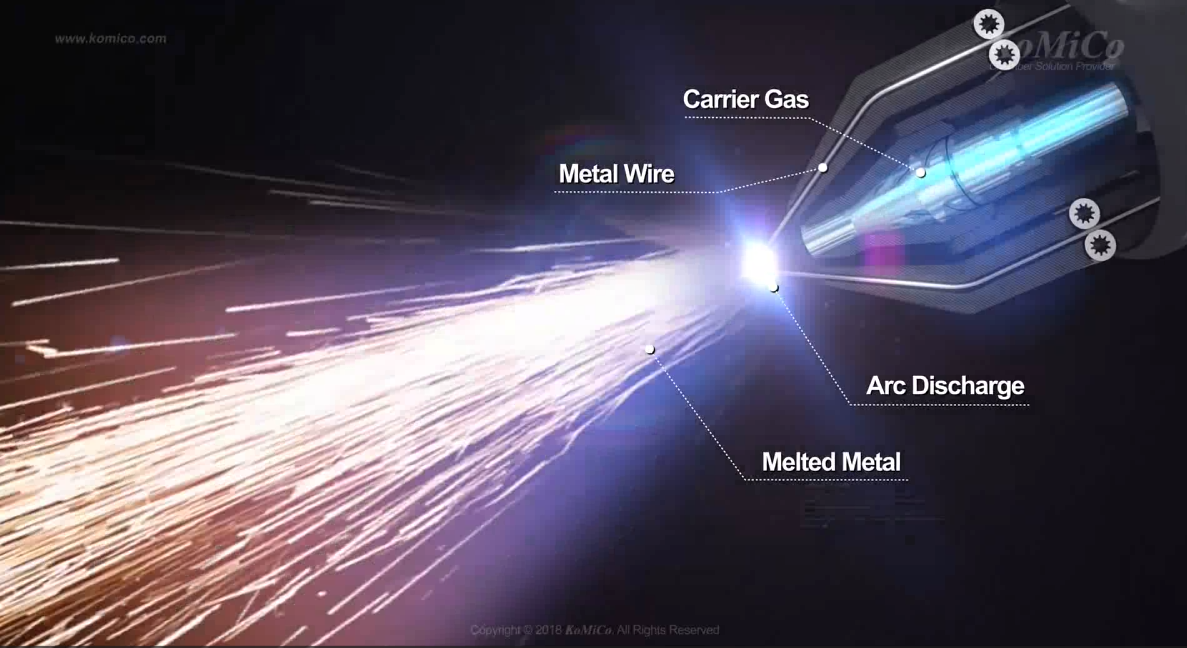
Arc Coating is a thermal metal coating technique in which a metal wire is instantaneously melted using an electric arc discharge and then rapidly sprayed onto the substrate surface. This method utilizes localized high-temperature energy to vaporize the metal, which is then propelled by air or gas to quickly form a solidified metallic layer on the substrate.
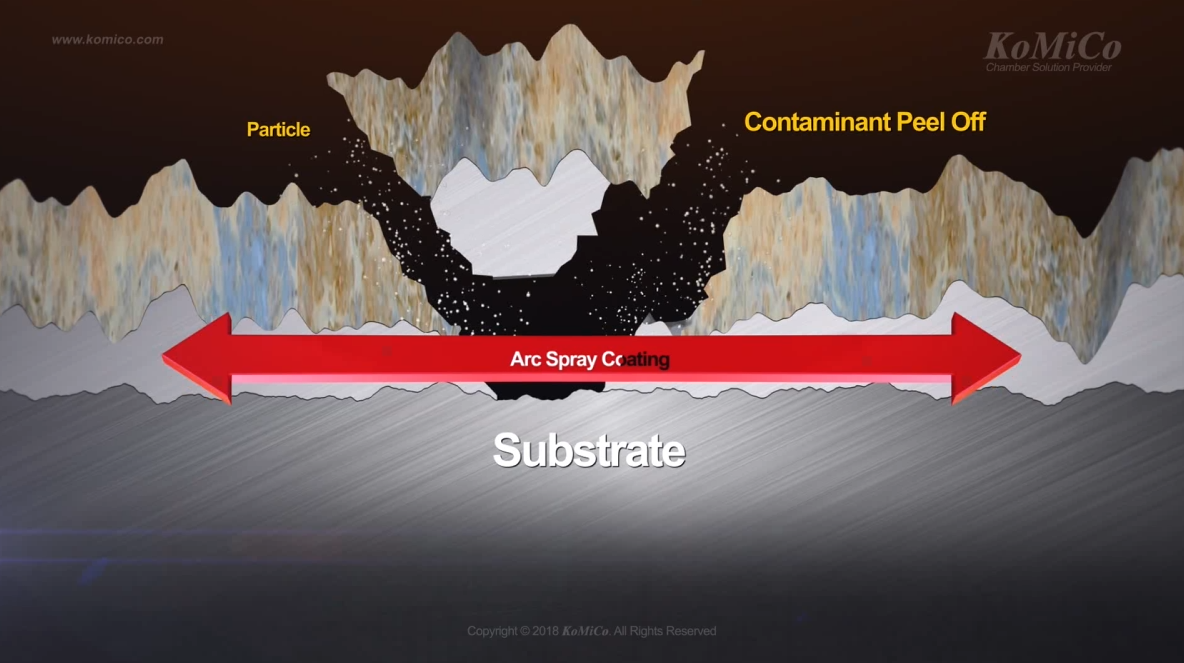
This technique is particularly effective for aluminum-based metals with low melting points, offering the advantage of forming a uniform metallic layer at relatively low temperatures without the need for additional heat treatment. Moreover, the resulting metal layer tends to have a rough texture and a high surface area, which significantly enhances the adhesion and fixation of scattered target materials during the PVD process.
| Category | Description |
| Coating Method | Electric arc discharge followed by rapid molten metal spray |
| Operating Temperature | Room to low temperatures (low thermal shock risk) |
| Adhesion Strength | Approximately 15–18 MPa |
| Porosity | Avg. 9.38% |
| Key Characteristics | High surface area, excellent target capture, thermal and oxidation stability |
In the semiconductor PVD process, metal targets are evaporated by plasma and deposited onto a substrate. During this process, the target material often scatters and adheres to various internal components of the chamber. When these components are not coated, the adhered material may peel off or develop cracks due to repeated thermal shocks, becoming a major source of particle contamination.
Arc Coating mitigates these process risks through the following mechanisms:
- Optimized Surface Roughness Design: The rough, high-surface-area texture promotes better capture and fixation of scattered target materials, reducing the likelihood of byproduct detachment.
- Enhanced Interfacial Adhesion: The coating layer adheres stably to the base material, preventing issues such as peeling, cracking, and delamination.
- Thermal Stress-Resistant Design: The coating structure is engineered with the thermal expansion coefficient of the metal in mind, minimizing cracking or delamination even under high-temperature plasma conditions.
■ SurfTex™ Series
KoMiCo has developed the SurfTex™ technology series to further advance its Arc Coating capabilities. SurfTex™ is a high-performance lineup specifically engineered to optimize coating properties such as physical characteristics, surface structure, and oxidation stability based on application needs.
It is designed to address a wide range of potential issues that may arise in actual semiconductor equipment environments.

| Technology | Key Features | Expected Benefits | Primary Purpose |
| SurfTex™-1 | High adhesion, uniform interfacial structure |
Suppresses peel-off and tear-off, extends PM cycles |
Enhances durability and interface stability |
| SurfTex™-2 | Increased surface area, controlled 3D morphology |
Improves byproduct capture efficiency, maximizes deposition area | Strengthens capture of deposition materials |
| SurfTex™-3 | Low-oxide layer, reinforced structural stability |
Suppresses oxygen diffusion, reduces oxidation during processing |
Durability in high-temperature and chemically harsh environments |
| SurfTex™-4 | Etched surface patterns | 90% higher surface area than SurfTex™-2, improved byproduct stability | Advanced high-efficiency patterned surfaces |
KoMiCo’s Arc Coating is more than just a metal coating technology—it is a strategic surface solution that enhances both the durability of semiconductor equipment components and the overall reliability of the process.
In particular, advanced coating technologies like the SurfTex™ series offer finely tuned control over surface structure, interfacial stability, and particle suppression performance, allowing for coating quality that is optimized for the demanding conditions of semiconductor manufacturing and tailored to specific customer requirements.
In the next article, we will introduce EGB Coating, one of KoMiCo’s premium coating technologies. EGB Coating is a high-performance surface protection solution that fundamentally blocks reactions with etching gases, significantly improving both the reliability and productivity of semiconductor processes. Stay tuned for more insights in the next post.
<About KoMiCo>
KoMiCo, established in 1996, was the first company in Korea to commercialize cleaning and coating services for semiconductor equipment components. With global operations spanning the United States, China, Taiwan, and Singapore, KoMiCo has earned quality certifications from some of the world’s leading semiconductor manufacturers, solidifying its position as a Global No.1 in the industry.
Building on its advanced cleaning and coating technologies, KoMiCo continues to enhance its core business while expanding into the development and supply of key OEM components for semiconductor equipment. Moving forward, the company remains committed to improving customers’ productivity and yield, and aims to become a global leader in the semiconductor component cleaning, coating, and manufacturing industry.


