The People Who Validate Quality Through Data: Kang Mul-gyeol, PB of the Analytical Technology Team
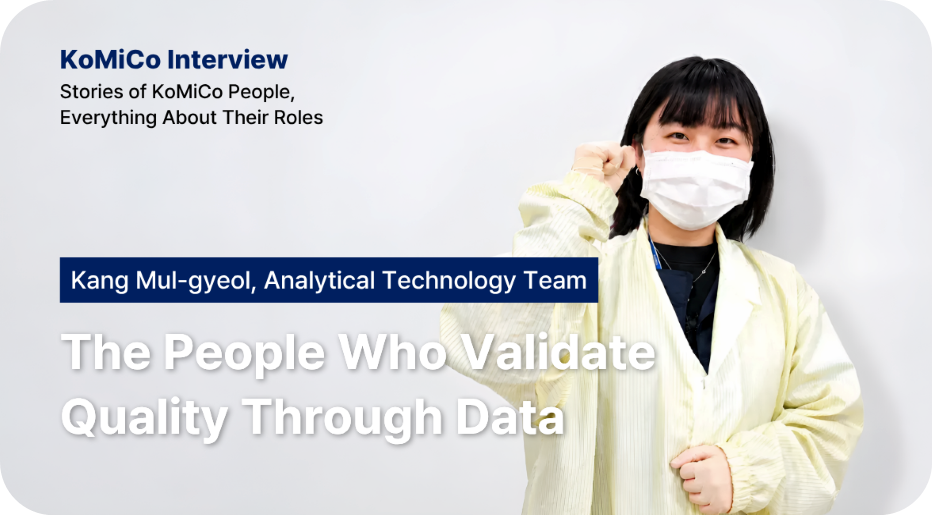
Today, we spoke with Kang Mul-gyeol, PB of the Analytical Technology Team, who is responsible for component analysis and customer VOC response activities within KoMiCo’s Quality Division, to learn more about the role and responsibilities of the Analytical Technology Team.
Q. Please introduce yourself.
Hello, my name is Kang Mul-gyeol, and I am responsible for analytical operations within the Analytical Technology Team of KoMiCo’s Quality Division.
My primary responsibilities include conducting analyses using FE-SEM (Field Emission Scanning Electron Microscopy) and supporting customer VOC response activities. By utilizing various advanced analytical instruments,
I examine surface conditions, contamination levels, coating quality, and microscopic defects of products and samples. Based on the analytical data obtained, I provide technical insights and data to both internal departments and customers.
In semiconductor manufacturing, even the smallest variation can significantly impact product quality and customer processes. Therefore, I believe it is essential to objectively evaluate data and accurately interpret results.
While prompt response is important, I always prioritize analytical accuracy and reliability above all else.
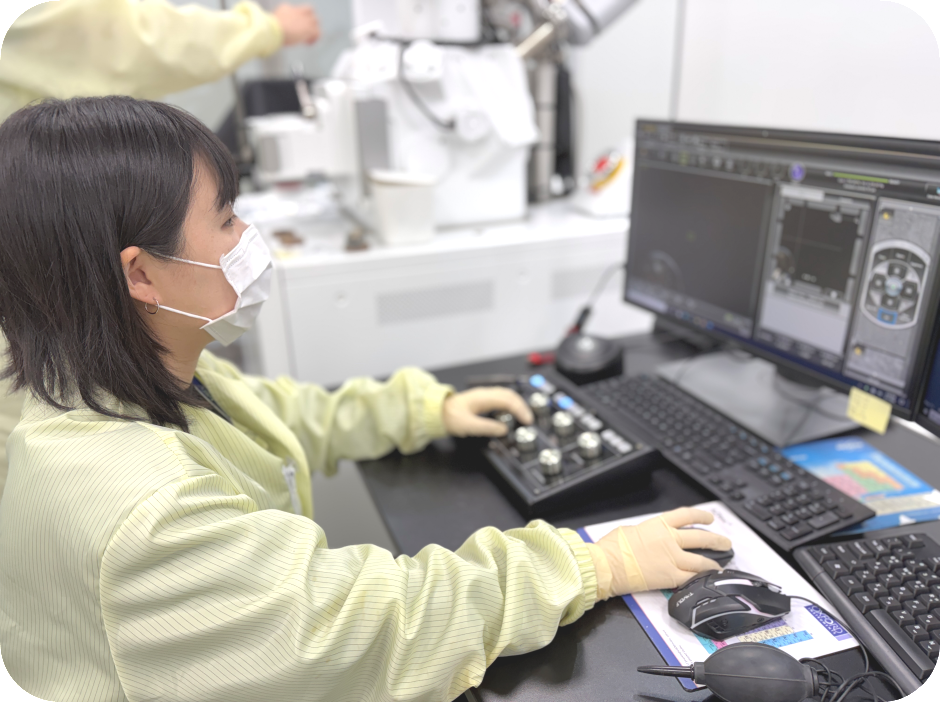
Q. What does KoMiCo’s Analytical Technology Team do?
The Analytical Technology Team is responsible for evaluating and analyzing product quality and conditions throughout KoMiCo’s semiconductor cleaning and coating processes.
Using a wide range of advanced analytical instruments, we assess surface conditions, material composition, contamination levels, and coating quality of cleaned and coated components. We also provide technical support for customer VOC cases and conduct root-cause investigations when quality issues arise, contributing to process improvement and quality stabilization.
In recent years, our role has expanded beyond conventional analytical services. We are actively engaged in developing new analytical technologies and enhancing data utilization capabilities. For example, we are developing measurement methodologies utilizing XR-based 3D modeling and virtual environment technologies, while also working on AI-powered report generation systems.
Rather than simply providing analytical data, the Analytical Technology Team serves as a technology-driven organization dedicated to advancing analytical methodologies and expanding the potential applications of data.
Q. What is the greatest strength of KoMiCo’s Analytical Technology Team?
I believe our greatest strengths are customer responsiveness and analytical reliability.
Given the nature of semiconductor manufacturing, even minor contamination or subtle surface changes can have critical implications. As a result, rapid and accurate analytical support is essential. Our team responds swiftly throughout the entire process—from customer VOC support and root-cause analysis to data verification.
In addition, we leverage a broad range of physical and chemical analytical techniques and instruments to perform root-cause-based investigations rather than simple measurements. We also continuously invest in the development of analytical equipment and methodologies.
Furthermore, KoMiCo’s Analytical Center is accredited under ISO/IEC 17025, demonstrating our commitment to analytical reliability and quality management. This accreditation plays an important role in building customer confidence and ensuring process stability.
Q. What does a typical workday look like for you?
At the start of each day, I review incoming analytical requests and customer VOC cases and prioritize tasks accordingly.
I then perform analyses using various analytical instruments and, when necessary, coordinate outsourced testing activities. Once the analyses are completed, I organize the results and share the findings with the requesting departments.
To ensure accurate interpretation of analytical results, I maintain close communication with related departments to fully understand the purpose of the analysis and the process background. Depending on the situation, I may also review potential improvements to analytical equipment or testing methodologies.

Q. What is the most challenging aspect of your job?
The most challenging aspect is delivering accurate analytical results within limited timeframes.
In customer VOC response situations, identifying the root cause quickly is often critical. However, in semiconductor manufacturing, even minute contamination or subtle variations can lead to significant issues. Therefore, while speed is important, analytical reliability and accuracy must always take precedence.
Since a single analytical result can directly influence process decisions and customer responses, I make every effort to objectively evaluate multiple possibilities before drawing conclusions. Although this responsibility can be challenging, it is also one of the most rewarding and meaningful aspects of analytical work.
Q. What core competencies are required for this role?
I believe the most important competency for an analytical engineering professional is the ability to maintain accuracy and objectivity in interpreting analytical results.
Analytical work is not simply about obtaining data; it involves objectively evaluating what the data means and accurately interpreting the results. Because we work with information that can directly affect semiconductor manufacturing processes, it is essential to approach problems based on analytical evidence rather than assumptions or subjective opinions.
Q. What are your future career goals?
My goal is to grow beyond simply operating analytical equipment and become an analytical engineer capable of accurately interpreting root causes and recommending process improvements based on analytical findings.
I also hope to deepen my expertise in FE-SEM and other advanced analytical instruments while developing the ability to optimize analytical conditions and methodologies independently.
Recently, I have become increasingly interested in AI and data-driven applications. I aspire to contribute to the development of systems that can automate analytical workflows, improve data utilization, and even predict outcomes based on analytical data, ultimately creating greater value through technology and innovation.

Q. Do you have any advice for those preparing to join KoMiCo’s Analytical Technology Team?
The Analytical Technology Team is not simply about operating equipment—it is about using data to identify root causes and solve problems.
At first, analytical instruments and semiconductor process terminology may seem challenging. However, as you continuously review analytical results and gain experience, your perspective naturally broadens. Rather than focusing solely on the outcome, I encourage you to constantly ask yourself, “Why did this result occur?”
Because the team provides opportunities to work with a variety of advanced technologies and analytical instruments, individuals with curiosity and a strong willingness to learn can experience significant professional growth. If you are passionate about solving problems through data-driven analysis, the Analytical Technology Team can offer an excellent environment to develop your expertise and career.
🔈 Curious about the positions currently open for recruitment?
Please visit the KoMiCo recruitment website below!